
Dr. Thomas A. 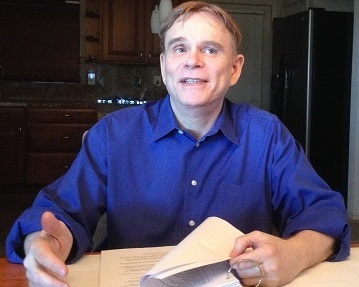 Richards is a licensed psychologist and the founder and director of the Social Anxiety Institute. He is now in his 26th year of helping people overcome social anxiety, by use of rational cognitive-behavioral therapy. He has seen people from all over the world and had the opportunity to work with them directly, individually and through social anxiety CBT groups.
The Social Anxiety Institute has become international as twenty-five percent of the people seen are from outside the United States.
Dr. Richards has spoken at conferences all over the United States about social anxiety, with an emphasis on helping people overcome it. In addition, he has been asked by many operating groups to help, speak, and answer questions about the "Overcoming Social Anxiety: Step by Step" program. He has spent many days with therapy groups throughout the country, helping group leaders become more effective. Once or twice a year, an international therapy group is scheduled, and Dr. Richards has welcomed people with social anxiety from over 26 countries now. The primary focus is on the people who have social anxiety disorder. Tens of millions of people throughout the world suffer from social anxiety, and it is the goal of the Social Anxiety Institute to help as many people as we can.
Thomas A. Richards earned his M.A. and Ph.D. from Arizona State University and taught psychology for several years in Arizona, Texas, and Arkansas. During this time, he won several awards for teaching and instructional excellence, and was chosen by students as outstanding professor of the year in 1994. That same year, he returned to Phoenix to set up an anxiety clinic that quickly became popular providing cognitive-behavioral solutions to people with panic, generalized anxiety, and social anxiety disorder.
After going through several name changes, the Anxiety Clinic of Arizona operated successfully for several years. The first social anxiety therapy groups occurred at this time and have continued to the present day. As the clinic reputation grew, Dr. Richards and staff made the decision to focus entirely on social anxiety disorder, because there was virtually no help for this problem anywhere in the world. The Social Anxiety Institute was officially founded in 1998, and the clinic's mission targeted people who had social anxiety disorder exclusively. The first international group happened accidentally in 1998, but within several weeks of agreeing to do it, the first "international" therapy group was in operation.
As the Social Anxiety Institute grew, Dr. Richards established the first website entirely dedicated to social anxiety. In 1998, the Social Anxiety Institute website became active and continues to this day. It was totally updated and revised at the beginning of 2013, and has increased its presence on the internet as a source for accurate information on social anxiety disorder.
As a result of Dr. Richards' prior experience dealing with other anxiety disorders, he published the first website that dealt solely with all the anxiety disorders. The Anxiety Network became operational in 1995, and continues to this day, reaching over 40,000 people a month.
Today, Dr. Richards is seen as one of the leading clinical authorities on social anxiety disorder, due to the international reputation of the Social Anxiety Institute and the fact that he has seen more patients with social anxiety disorder than any other therapist or psychologist in practice. People travel to SAI from every corner of the world because adequate treatment for social anxiety disorder does not yet exist. The international program at the Social Anxiety Institute has been operating continuously since 1998. The treatment programs at the Social Anxiety Institute are the most comprehensive and therapeutic programs in the world for social anxiety.
The weekly all-day Saturday programs continue to run, and the program has grown exponentially since 1994. The current Saturday group is made up of people from all over the United States -- people who have moved here to receive treatment, as comprehensive treatment for social anxiety does not exist in most areas. The Social Anxiety Institute has become a national and international treatment center.
At present, he and his team, led by experienced therapist Matthew Whitley, are working on another large project to provide added therapy assistance to people who cannot make it to the Social Anxiety Institute for any of its programs.